

Plant pairings and layered landscape ideas that bring long-lasting color & texture
A colorful garden rarely comes from planting one great flower and hoping for the best. The most eye-catching landscape beds are usually built around plant combinations that work together in color, height, texture, and bloom timing.
That is what gives a garden bed that polished, professionally designed look.
In New Jersey, some of the best planting combinations pair bold blooms with interesting foliage, upright flowers with softer mounding plants, or shrubs with lower-growing perennials that help fill the bed and keep it attractive through more of the season. The goal is not just more color, but better color placement – the kind of layered, balanced planting approach that makes a landscape feel intentional and inviting.
At PHR Landscapes, we always appreciate combinations that do more than simply bloom. The strongest garden beds create contrast, carry visual interest across more of the season, and help a property feel more vibrant from the curb. Below are five beautiful plant combinations that can add a real burst of color to New Jersey garden beds, front yard landscapes, and foundation plantings.
For each one, we will look at why the pairing works, where to use it, how to plant it, how to maintain it, and what makes it stand out.
1. Panicle Hydrangea + Coral Bells
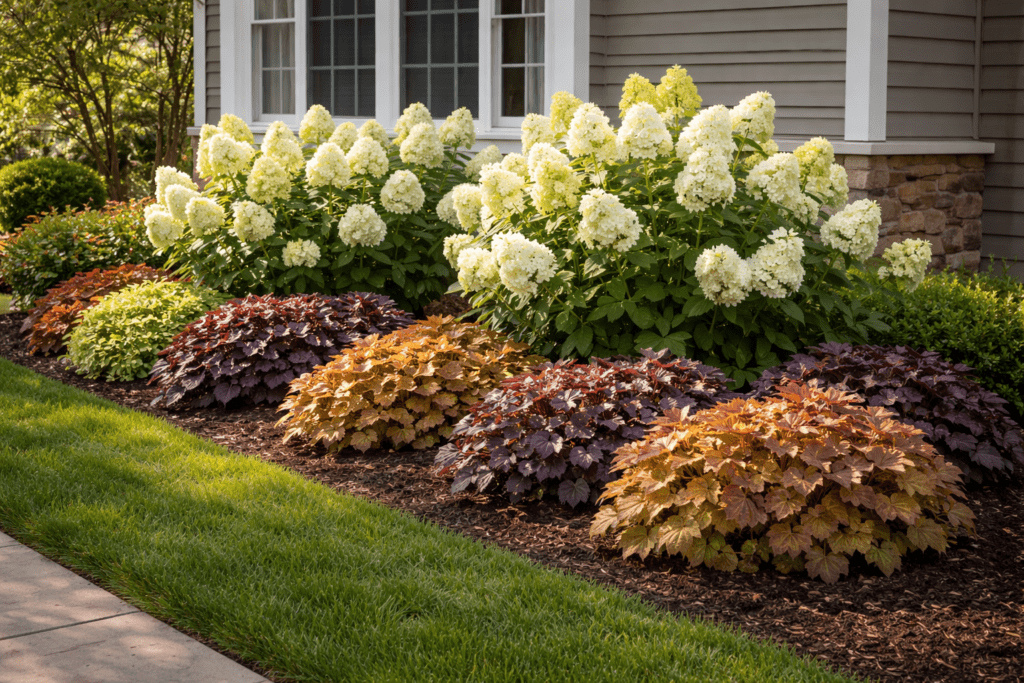
This plant combination creates a garden bed that feels lush, layered, and professionally finished. Panicle hydrangeas bring large, showy blooms that instantly grab attention, while coral bells add rich foliage color at the base of the planting.
Why this combination works
The visual strength of this pairing comes from doing two jobs at once.
The hydrangea provides the dramatic focal point. Its large blooms create that “wow” factor people notice from the curb. Coral bells, on the other hand, fill the lower layer of the bed with colorful foliage in shades like burgundy, lime, bronze, caramel, or deep purple.
That means the bed still looks attractive even when the hydrangea is not at peak bloom.
Instead of relying on flowers alone, this combination uses both bloom color and foliage color to keep the planting interesting.
Best place to use it
This is one of the best combinations for:
- foundation beds
- front walk plantings
- entryway landscapes
- partial sun beds that need structure and color
It works especially well in landscapes where you want something tidy, upscale, and long-lasting rather than overly wild or loose.
Recommended Planting:
Use the hydrangea as the anchor plant in the back or middle of the bed, depending on the viewing angle. Then mass coral bells in front of it in groups rather than planting one here and one there.
The goal is to create a layered effect:
- taller shrub in back
- colorful low mounding foliage in front
- enough spacing for the hydrangea to mature without crowding
A grouped planting will always look stronger and more intentional than a scattered one.
Care and maintenance tips
Panicle hydrangeas generally perform best with a good balance of sun and moisture, while coral bells appreciate decent drainage and benefit from not being buried too deeply at planting time. Keep the bed mulched to help regulate soil moisture and reduce weed pressure.
What makes it special
This pairing is beautiful because it looks high-end without being complicated. Even when the hydrangea is between peaks, the coral bells keep the bed from looking empty at ground level.
That lower layer is often the difference between a basic shrub bed and one that feels designed.
2. Salvia + Catmint + Allium
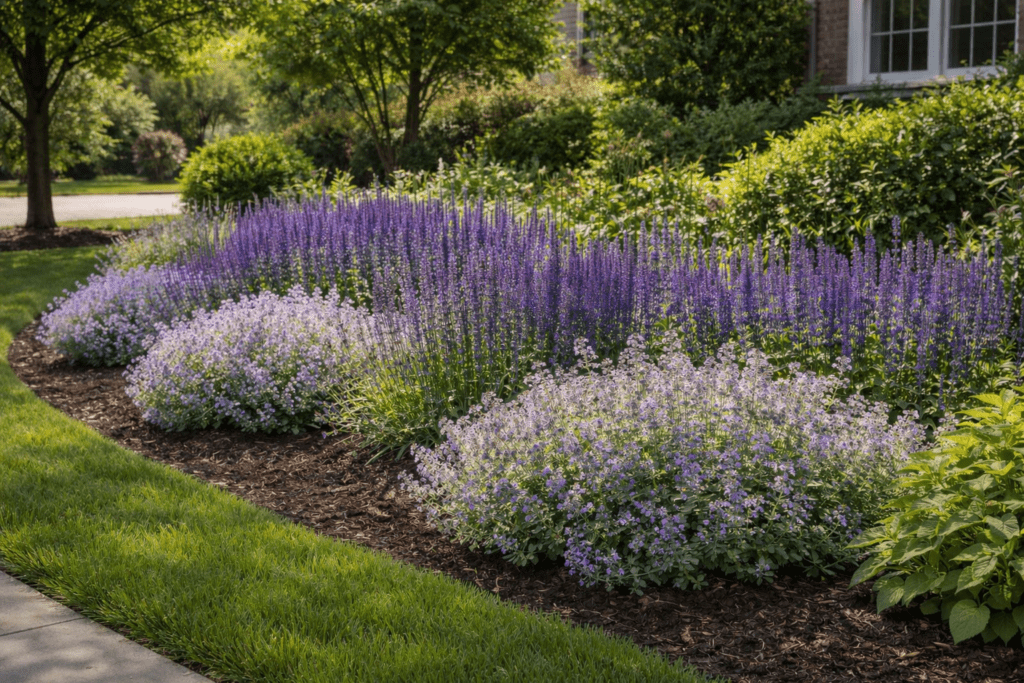
If you want a planting combination that feels colorful, elegant, and full of movement, this is one of the best choices for late spring and early summer. Salvia brings upright flower spikes, catmint creates soft flowing mounds, and allium adds round, floating blooms that rise above the rest.
Why this combination works
This combination proves that a garden does not need ten different colors to make an impact.
Because these plants stay mostly within the purple-blue family, the planting looks unified rather than chaotic. But because each plant flowers in a different form, the bed still feels exciting and dynamic.
You get:
- vertical spikes from salvia
- soft mounding color from catmint
- globe-shaped blooms from allium
That mix of shapes makes the planting feel full of life.
Best place to use it
This combination is ideal for:
- front yard borders
- sunny walkways
- mailbox beds
- cottage-style gardens
- pollinator-friendly beds
It works especially well in spaces where you want a colorful display that still feels refined.
Recommended Planting:
Place allium toward the middle or rear of the bed so its stems and globe flowers can float above the other plants. Use salvia in drifts or grouped clusters, then soften the edge with catmint near the front of the bed.
This layered structure helps each plant remain visible and keeps the planting from becoming a blur of one height.
3. Black-Eyed Susan + Purple Coneflower
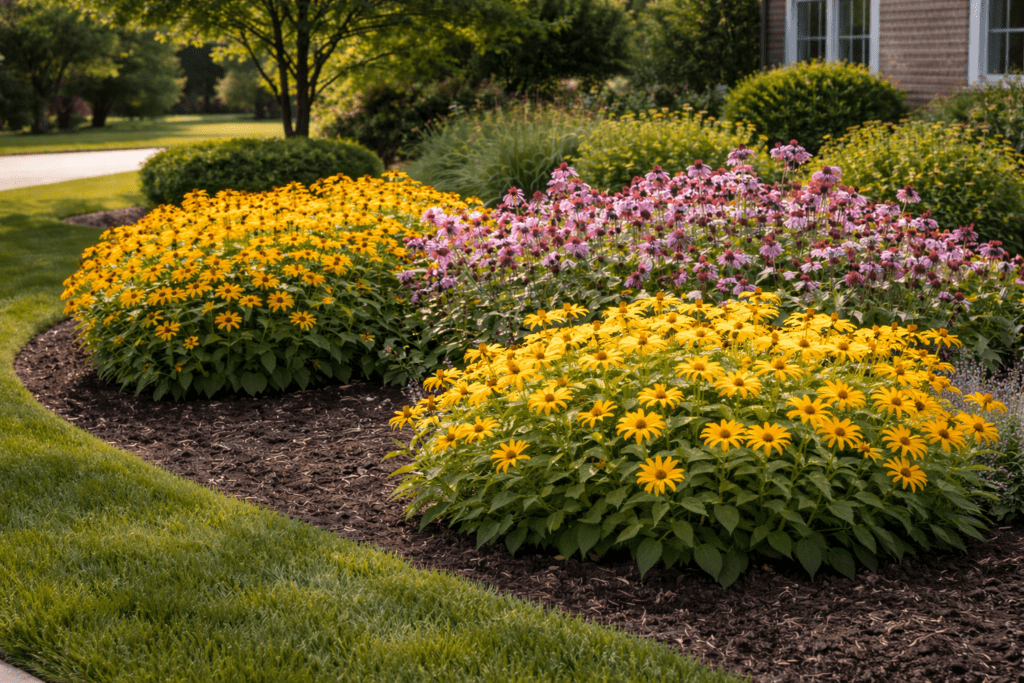
This is one of the most classic colorful combinations for a reason. Black-eyed Susan and purple coneflower create bold contrast, strong seasonal color, and a more natural garden look that still feels attractive and intentional.
Why this combination works
Yellow and purple are naturally high-impact together.
The golden petals of Black-eyed Susan bring brightness and warmth, while purple coneflower adds richer tones and a different flower form. When planted in groups, the contrast shows up clearly from a distance and gives the bed a cheerful, energetic look.
This is also a good example of how repeating just two dominant colors can feel more effective than mixing too many.
Best place to use it
This pairing works beautifully in:
- sunny border gardens
- naturalized plantings
- pollinator beds
- side-yard beds
- larger front yard beds that need long-lasting color
It is especially useful in landscapes that lean a little more natural and less formal.
How to plant it
Do not alternate them one by one.
Instead, plant them in drifts or grouped pockets so the colors repeat across the bed. That repetition makes the planting look intentional and gives it better visual rhythm. You can also add ornamental grasses nearby if you want more movement and texture later.
Care and maintenance tips
Both plants prefer full sun and generally become easier to manage once established. They are a strong fit for homeowners who want perennial color without constantly replanting annuals.
What makes it special
This combination hits three strong homeowner priorities at once:
- bold color
- pollinator appeal
- easy, approachable beauty
It feels bright and full, but it does not look overly formal or fussy.
4. Daylily + Catmint
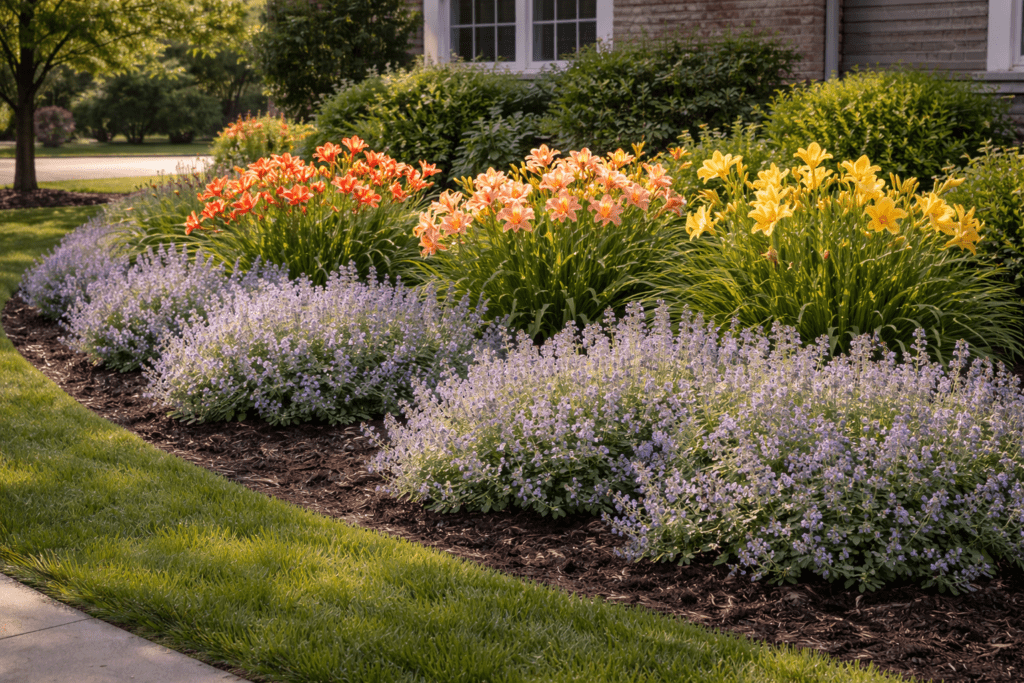
This is one of the easiest ways to create a garden bed that feels colorful, soft, and full of contrast. Daylilies bring large trumpet-shaped blooms and strong upright foliage, while catmint creates a hazy cloud of blue-violet flowers around the base.
Why this combination works
This pairing works because of both color contrast and shape contrast.
Warm daylily shades like yellow, peach, orange, or coral stand out beautifully against the cooler lavender-blue tones of catmint. On top of that, the tall, strappy daylily foliage looks very different from catmint’s softer, rounded habit.
That difference makes both plants look even better together.
Best place to use it
This is a great option for:
- sunny front beds
- walkway borders
- mailbox plantings
- mixed perennial beds
- areas where you want long-lasting structure with seasonal bursts of color
It is also one of the more approachable combinations for homeowners who want something beautiful but not high-maintenance.
How to plant it
Plant catmint near the front edge or as a soft filler around the base of the bed. Set daylilies slightly behind it or in repeating clusters within the planting.
The best look usually comes from allowing the catmint to spill gently while daylily blooms rise above it.
Care and maintenance tips
This combination benefits from full sun and reasonable spacing so each plant can mature properly. Catmint can be lightly sheared after bloom to keep it neat and encourage a refreshed appearance. Daylilies benefit from removing spent blooms and occasional division over time if clumps become crowded.
What makes it special
This combo gives you that “burst of color” feeling without requiring a complicated planting plan.
It feels welcoming and bright, and it works especially well in landscapes that want a softer, more inviting style rather than something stiff and formal.
5. Oakleaf Hydrangea + Hosta + Coral Bells
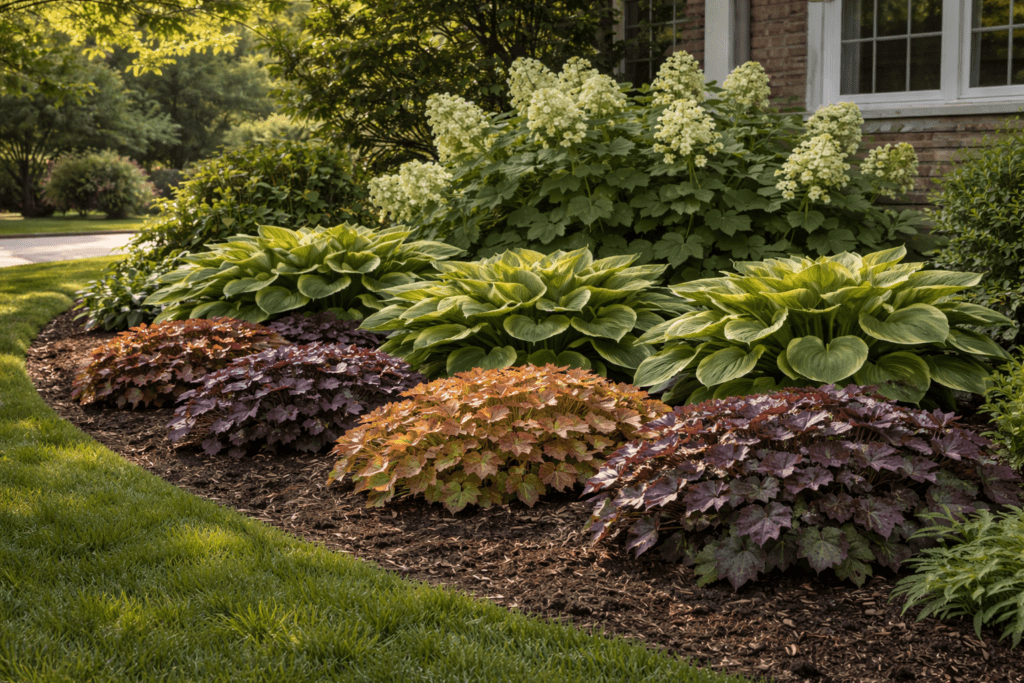
For part-shade landscapes, this is one of the best combinations for creating rich color and texture without depending on nonstop flowers. Oakleaf hydrangea brings structure and showy blooms, hosta adds broad foliage, and coral bells introduce more colorful leaf tones close to the ground.
Why this combination works
This is a layering combination.
Instead of using one flashy bloom to carry the entire bed, it builds beauty through:
- shrub structure
- contrasting leaf size
- flower and foliage interplay
- season-long texture
The result is a bed that stays attractive for longer because it is not relying on one short bloom period.
Best place to use it
This combination is excellent for:
- shaded foundation beds
- porch-side landscapes
- side-of-house plantings
- filtered-light garden beds
- areas under taller trees with decent light
It is a great fit for homeowners who struggle with shade but still want a lush, colorful look.
How to plant it
Use the oakleaf hydrangea as the back anchor, hostas in clustered groups around the middle, and coral bells as the front edge or lower filler.
This creates a very natural visual step-down from tall to medium to low.
Care and maintenance tips
Part-shade beds still need spacing, air flow, and attention to moisture. Hostas and coral bells generally appreciate a consistent environment without extreme drying out, while oakleaf hydrangea benefits from being given enough room to reach its natural shape. Keeping mulch in place helps hold moisture and keeps the bed looking finished.
What makes it special
This is the combination that shows homeowners that color is not only about flowers.
Bold foliage color, different leaf shapes, and layered plant heights can create just as much beauty as a bed filled with blooms.
How to Make Plant Combinations Look Better in Real Landscapes
Even the best plant pairing can fall flat if it is planted randomly.
A few simple design principles go a long way:
Plant in groups, not singles
One hydrangea with one coral bell and one daylily often looks accidental. Grouped planting creates rhythm, repetition, and a more polished appearance.
Think in layers
Most attractive beds have:
- a taller back layer
- a medium middle layer
- a lower front layer
That helps each plant remain visible and creates more depth.
Use color with intention
Great combinations usually rely on one of two approaches:
- contrast, like yellow with purple or warm flowers against cool tones
- harmony, like several shades of blue and violet used together
Both can be beautiful when done well.
Mix flowers with foliage
A bed that depends only on blooms may look underwhelming once flowers fade. A bed that combines flowers with colorful or textured foliage tends to stay attractive longer.
Consider bloom timing
The best landscape beds do not put on a show for one week and then disappear. Pairing plants with overlapping or staggered bloom windows helps keep garden beds colorful and engaging for a longer stretch of the season.
The Better Landscaping Company in Westfield, Fanwood, & Scotch Plains NJ
The best garden beds are rarely built around one plant doing all the work.
They come together through smart combinations that create contrast, support longer seasonal interest, and make each plant look better by pairing it with the right companion. Whether you prefer bold sunny borders, soft purple perennial combinations, or lush shade plantings, the right mix of flowers and foliage can completely change the look of a New Jersey landscape bed.
For homeowners looking to refresh their garden this season, these types of combinations are a great place to start. Instead of asking which single plant looks best, it is often more useful to ask:
Which plants look best together?
Maintaining a manicured landscape starts with consistent, professional care – and that’s where we come in!
💡 If you’re looking for a dependable, experienced landscaping services in Scotch Plains, Fanwood, Westfield, and Surrounding Areas, we’re here to help.
👉 Call PHR Today to Schedule Your Free Consultation
👉 Landscape Design in Westfield, Fanwood, Scotch Plains and Surrounding Areas
Share This Post with Friends & Colleagues

Follow us on Facebook @PHRLandscapes
Phone: (908) 322-6500
Email: sales@phrlandscapes.com
1590 E. 2nd Street, Scotch Plains, NJ 07076
