

PHR’s Top 10 Mulching Tips for New Jersey Homes
Updated 04/09/2026
As spring arrives in New Jersey, homeowners start looking for practical ways to improve curb appeal, protect planting beds, and prepare their landscapes for the warmer months ahead. One of the simplest and most effective ways to do that is with proper mulching.
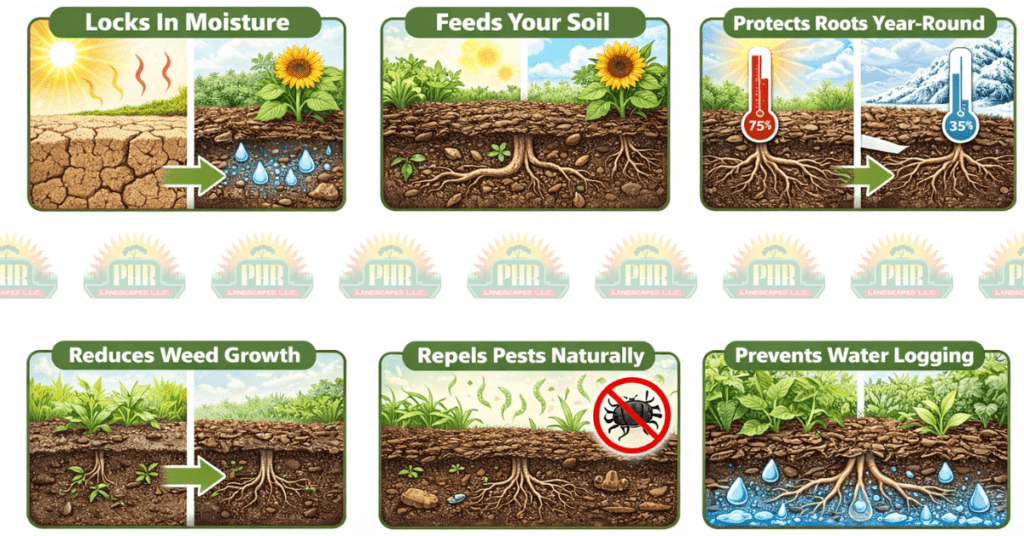
Mulch does much more than make flower beds look fresh. When installed correctly, it helps retain soil moisture, suppress weeds, regulate soil temperature, reduce erosion, and support healthier plant growth throughout the season. It can also play an important role in improving the overall appearance and function of your landscape beds around trees, shrubs, foundation plantings, and garden areas.
The key is knowing how to mulch the right way.
In this guide, we break down PHR’s top 10 mulching tips for New Jersey homes, along with common mistakes to avoid, the best mulch types for different areas of the yard, and how to know when it’s time to refresh your beds. Whether you are handling spring mulching yourself or looking for a professional landscape company in Scotch Plains, Fanwood, Westfield, or nearby, these tips will help you get more value out of every mulch application.

FAQ: Mulching in New Jersey
The best time to mulch in New Jersey is usually in spring, once landscape beds have been cleaned out and the soil begins to warm. This helps retain moisture, suppress weeds, and give the property a fresh, finished look heading into the growing season. Fall can also be a good time to mulch, especially for added root protection before winter.
For most landscape beds, mulch should be applied at about 2 to 3 inches deep. This is usually enough to help with moisture retention and weed suppression without smothering roots or holding too much moisture against plants. Applying too much mulch can create drainage and plant health issues over time.
Mulch should be kept away from piling on tree trunks, shrub bases, and plant stems. Piling mulch directly against them can trap moisture, encourage rot, and create conditions that attract pests. A properly mulched bed should leave a small open space around the base of the plant if possible.
Not always. If the existing mulch layer is still in good shape and not too thick, it can often be turned and lightly refreshed. However, if old mulch has become compacted, built up too much, or started breaking down into a dense layer, some removal may be needed before new mulch is added.
For most New Jersey homes, PHR recommends organic wood-based mulch is a great all-around choice because it looks clean, helps retain moisture, suppresses weeds, and breaks down naturally over time. The best mulch can vary depending on the area, though. Some beds may benefit from shredded hardwood mulch, while others may be better suited for pine-based mulch, compost mulch, or decorative stone.
Most mulch beds should be refreshed once or twice a year, usually in spring and sometimes fall. That does not always mean a full replacement. In many cases, a light top-off and bed touch-up is all that is needed to restore appearance and maintain proper coverage.
Yes. Mulch helps prevent weeds by blocking sunlight from reaching weed seeds and reducing the conditions that allow weeds to take over open soil. It works best when beds are cleaned and prepared properly before the mulch is installed.
Mulch can help reduce surface runoff and protect exposed soil, but it is not a complete fix for serious drainage issues. It works best as part of an overall landscape strategy that may also include grading, bed shaping, planting layout, or other drainage improvements.
Professional mulching can make a big difference in both appearance and performance. A professional installation helps ensure the beds are edged cleanly, the mulch depth is correct, the material is applied evenly, and the finished look complements the rest of the landscape.
Mulch Plays a Major Role in New Jersey Landscape Health
New Jersey properties deal with a little bit of everything throughout the year. Wet spring conditions, summer heat, occasional drought stress, falling leaves, winter freeze-thaw cycles, and compacted soils can all take a toll on planting beds and root systems.
That is why mulch is such a valuable part of a healthy landscape plan.
A properly mulched landscape bed helps soil hold moisture longer during hot weather, reduces weed competition, limits temperature swings around plant roots, and helps prevent bare soil from washing out during heavy rain. Mulch also creates a cleaner, more defined appearance that immediately improves curb appeal.
For many homeowners, mulching is one of the highest-impact seasonal upgrades you can make to the property without a major renovation.
Common Mulching Mistakes to Avoid
Even quality mulch can cause problems if it is used incorrectly. Some of the most common mulching mistakes include:
- applying mulch too thick
- piling mulch against trunks or stems
- burying old mulch under too many new layers
- mulching over weeds instead of clearing beds first
- using the wrong mulch type for the area
- allowing mulch to trap moisture against foundations
- skipping bed edging, which leads to a messy finish
A professional-looking mulch job is not just about color. It is about depth, placement, bed preparation, and the overall finish of the installation.
Mulching Tips for New Jersey Homes:
1. Apply the Right Mulch Depth
- For organic mulches (wood chips, bark, compost), apply 2-4 inches of coverage; inorganic mulches like gravel or rubber may need only 2-3 inches.
- Too little mulch won’t retain moisture; too much can suffocate roots, foster disease, or create “mulch volcanoes” around trees.
Using the correct depth of mulch is critical for achieving its full benefits. For organic materials like bark or wood chips, apply 2-4 inches; for inorganic mulch such as gravel, 2-3 inches is sufficient. Too little mulch fails to conserve moisture or stop weeds, while too much can prevent oxygen from reaching plant roots and encourage rot. Always maintain consistent thickness across beds for even moisture retention.
2. Keep Mulch Off Tree Trunks and Foundations
- Avoid piling mulch directly against trunks or basements. Maintain a 2-4 inch gap to prevent rot and termite pests.
- Ensure ground slopes away from foundations to aid proper drainage.
Mulch should never be piled directly against tree trunks or home foundations. This mistake often leads to trunk rot, fungal growth, and pest infestations. Leave a 2-4 inch gap around trunks and structural walls to promote air circulation and reduce the risk of termites or water damage. Keeping mulch away from foundations also helps prevent basement seepage and mold.
3. Choose the Best Mulch Types for NJ Climates
- Wood-based mulches (bark, wood chips): long-lasting, attractive, and effective at moisture control.
- Pine straw: excellent on slopes, provides erosion control, and stabilizes acidic soils.
- Compost/leaf mulch: nutrient-rich, biodegradable, ideal for garden beds.
- Inorganic mulches: gravel/river rock for drainage-critical zones or under swings where cleanliness matters.
New Jersey’s mixed climate makes certain mulches more effective than others. Wood chips and bark last long and enhance visual appeal, while pine straw works well on slopes due to its interlocking structure. Compost or leaf mulch is excellent for flower and vegetable beds thanks to its soil-enriching properties. Inorganic mulches like gravel are best for pathways and drainage-heavy areas.
4. Time Your Mulch Application
- Spring (after the soil warms) and fall (after plants go dormant) are ideal times.
- In New Jersey, meliorate mulch between late April and mid-May for optimal growth and moisture retention.
The best times to apply mulch in New Jersey are late spring and early fall. In spring, wait until the soil has warmed to promote healthy plant growth. Fall mulching helps insulate roots and retain soil moisture through winter. Applying mulch at the right time maximizes its impact on plant health and reduces the need for watering and weed control.
5. Improve Yard Drainage With Mulch
- Mulch intercepts rain, reduces runoff, and encourages infiltration.
- Infiltration studies show organic mulch can reduce runoff by 20-80%, depending on thickness.
- Well-mulched rain gardens or bioretention areas can absorb up to 90% of stormwater annually.
Mulch can play a big role in stormwater management by absorbing rainfall and reducing surface runoff. Organic mulch creates a porous layer that allows water to soak into the soil rather than pooling on top. This is especially helpful in flat or clay-heavy areas common in New Jersey. Strategic mulching around garden beds and rain gardens can improve infiltration by up to 80%.
6. Select Quality Mulch Source
- Opt for reputable brands or local arborist chips, free from disease or harmful chemicals.
- Avoid fresh mulch that can rob soil nitrogen or contain pests.
Not all mulch is created equal. High-quality mulch from reputable suppliers is free from disease, pests, and synthetic chemicals. Cheap or recycled mulch may contain contaminants or weed seeds that harm your landscape. Look for natural, well-aged mulch that smells earthy and shows no signs of mold. Sourcing locally can also ensure climate-appropriate material.
7. Turn and Refresh Annually
- Fluff mulch yearly to prevent matting and preserve air/moisture permeability.
- Add ½-1 inch fresh mulch annually rather than piling on thick layers.
Over time, mulch can compact and lose its effectiveness. It’s important to rake or fluff existing mulch each year to restore airflow and water permeability. Adding a fresh half-inch to one inch annually can keep your beds looking vibrant and functioning properly without over-mulching. This annual maintenance also helps suppress weed growth and boost aesthetics.
8. Tailor Mulch for New Jersey Landscaping
- In areas prone to clay compaction, organic mulch plus compost improves drainage.
- Gravel or coarse bark are smart choices near patios or high-traffic areas to resist compaction.
Each landscape has unique requirements depending on soil type, sun exposure, and usage. In clay-heavy soil areas, use mulch that improves drainage like shredded bark mixed with compost. For high-traffic zones such as walkways, choose durable inorganic options like gravel or rubber mulch. Matching mulch type to each section of your yard maximizes performance and longevity.
9. Integrate with Backyard Drainage Solutions
- Pair mulch with:
- French drains or perforated piping in persistent waterlogged zones.
- Bioswales and shallow channels that use mulch and plants to channel runoff.
- Rain garden mulched beds that store and filter stormwater before infiltration.
Mulch pairs well with engineered drainage strategies like French drains, dry wells, and bioswales. Mulching over perforated piping or in rain gardens slows down water and improves absorption into the ground. When used with sloped swales or berms, mulch helps direct stormwater away from foundations and into safe drainage areas, reducing erosion and water damage risk.
10. Use Specialized Mulch Around Sensitive Plants
- Acid-loving plants (azalea, rhododendron) thrive under pine or spruce mulch.
- Vegetable and perennial beds benefit from nutrient-rich compost mulches.
- Living mulch such as clover or grass aligns with sustainable landscapes.
Different plants have different needs when it comes to soil chemistry and moisture. Acid-loving plants like azaleas and rhododendrons prefer pine-based mulch, which slightly lowers soil pH. Vegetable gardens thrive with compost-based mulch that adds nutrients as it breaks down. Living mulches like clover offer a sustainable alternative that provides ground cover and nitrogen-fixing benefits.
Bonus: Mulch Benefits for Soil & Water
Mulching doesn’t just make your yard look tidy, it significantly improves environmental performance. It reduces the need for frequent watering, prevents erosion, moderates soil temperature, and blocks weed growth. Proper mulching leads to healthier plants, improved root systems, and a more resilient landscape over time.
Quick Guide: How to Mulch the Right Way
If you are mulching your own beds, follow this basic process:
- Clear out weeds, leaves, and debris
- Redefine bed edges for a clean shape
- Check the current mulch depth
- Remove excess or compacted old mulch if needed
- Lightly loosen the surface of the bed where appropriate
- Water dry soil before installation if conditions are very dry
- Apply mulch evenly at about 2 to 3 inches deep
- Keep mulch away from trunks, stems, and the home’s foundation
- Smooth and level the bed for a neat finished look
- Inspect after rain to make sure the material stays in place properly
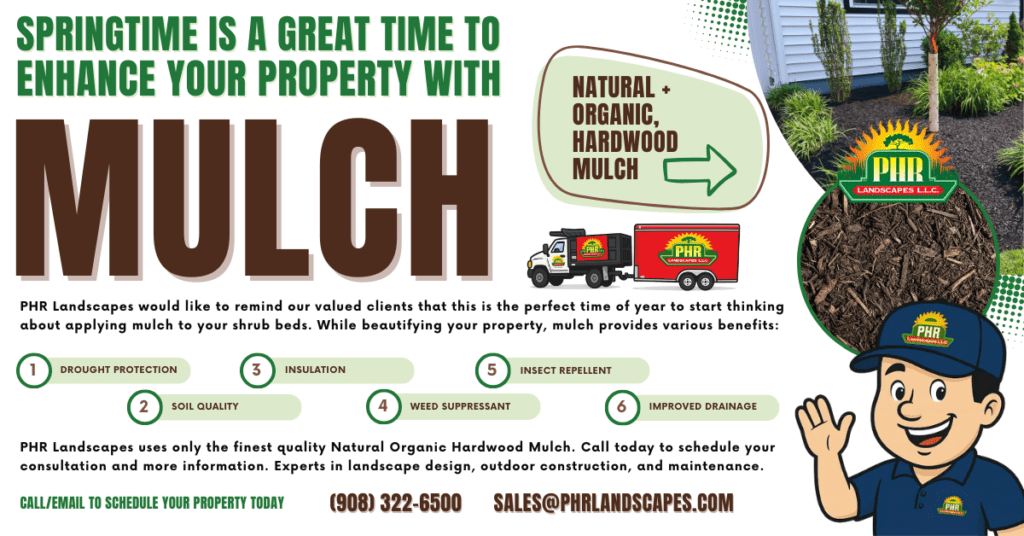
When you’re ready to enhance yard drainage and apply expert mulching, PHR Landscapes brings unmatched value:
- Specialists in Scotch Plains, Fanwood, Westfield NJ (and surrounding areas!)
- Use of premium organic mulch
- Integrated drainage solutions – French drains, bioswales, rain gardens
- Maintenance-free approach with follow-ups included
Follow these mulching tips, and you’ll set your yard up for success now and into the fall. If you ever need a hand, you know who to call!
Landscaping in Scotch Plains, Fanwood, Westfield and Surrounding Areas
Looking for quality landscaping services in Scotch Plains, NJ? From Planting to Yard Renovations, PHR Landscapes is here to help your property thrive.
👉 Contact us today for a free consultation.
Share This Post with Friends & Colleagues

Follow us on Facebook @PHRLandscapes
Phone: (908) 322-6500
Email: sales@phrlandscapes.com
1590 E. 2nd Street, Scotch Plains, NJ 07076
